




Login
Login
The Ægishjálmur is the most powerful protection symbol in the Nordic tradition. Discover its origin, its meaning and how Gemma Anjana hand-carves it on Aragonese olive wood from Paracuellos de la Ribera.
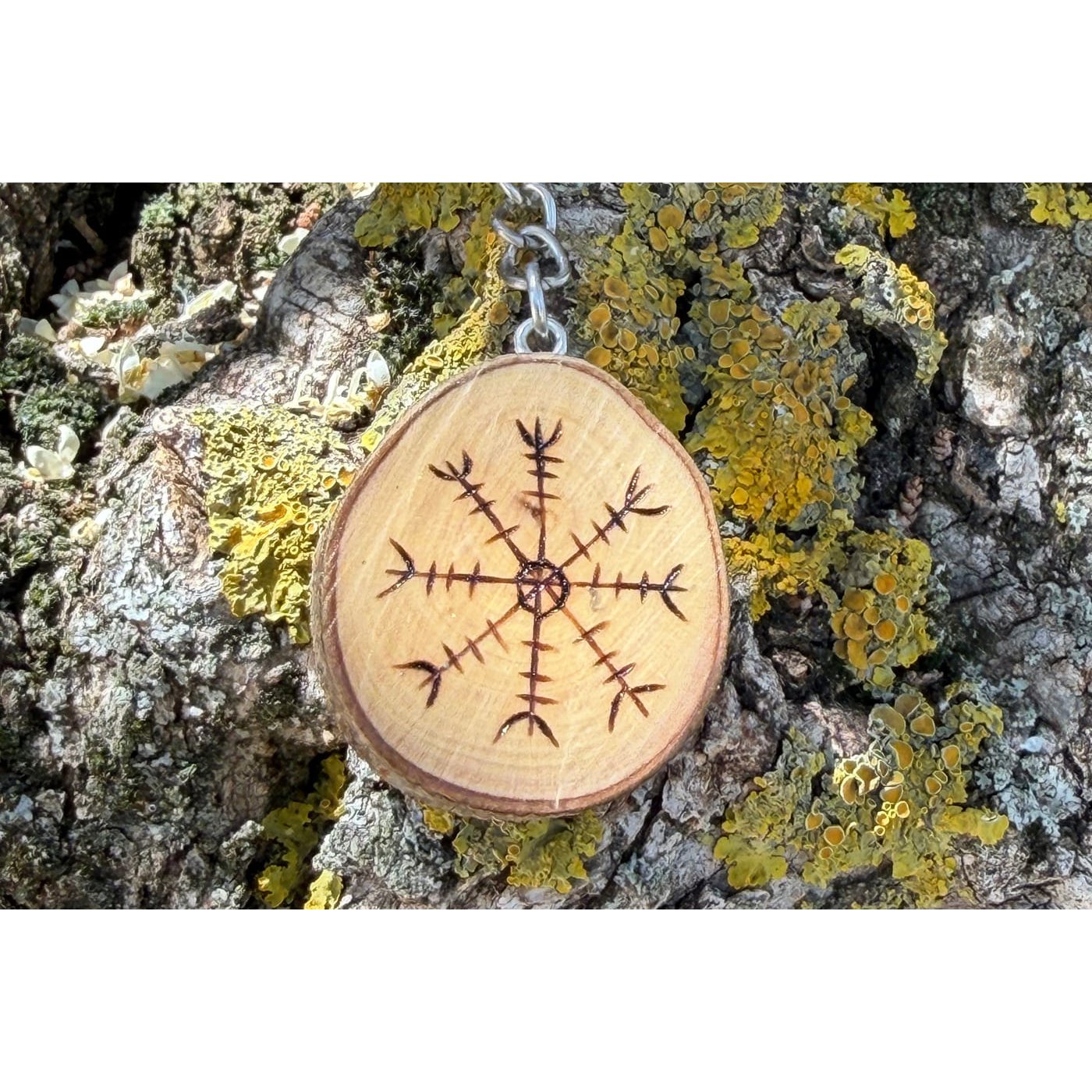
There are symbols that protect. And there are symbols that terrify. The Ægishjálmur does both at once — and that duality is exactly why it has fascinated those drawn to the Nordic tradition for centuries.
I am Gemma Anjana, runic artisan in Paracuellos de la Ribera, Calatayud region. When I engrave the Ægishjálmur by hand on Aragonese olive wood, I do so with the same respect it deserved in the Nordic tradition — as what it is: one of the most powerful protection symbols that has ever existed. This article tells its story.
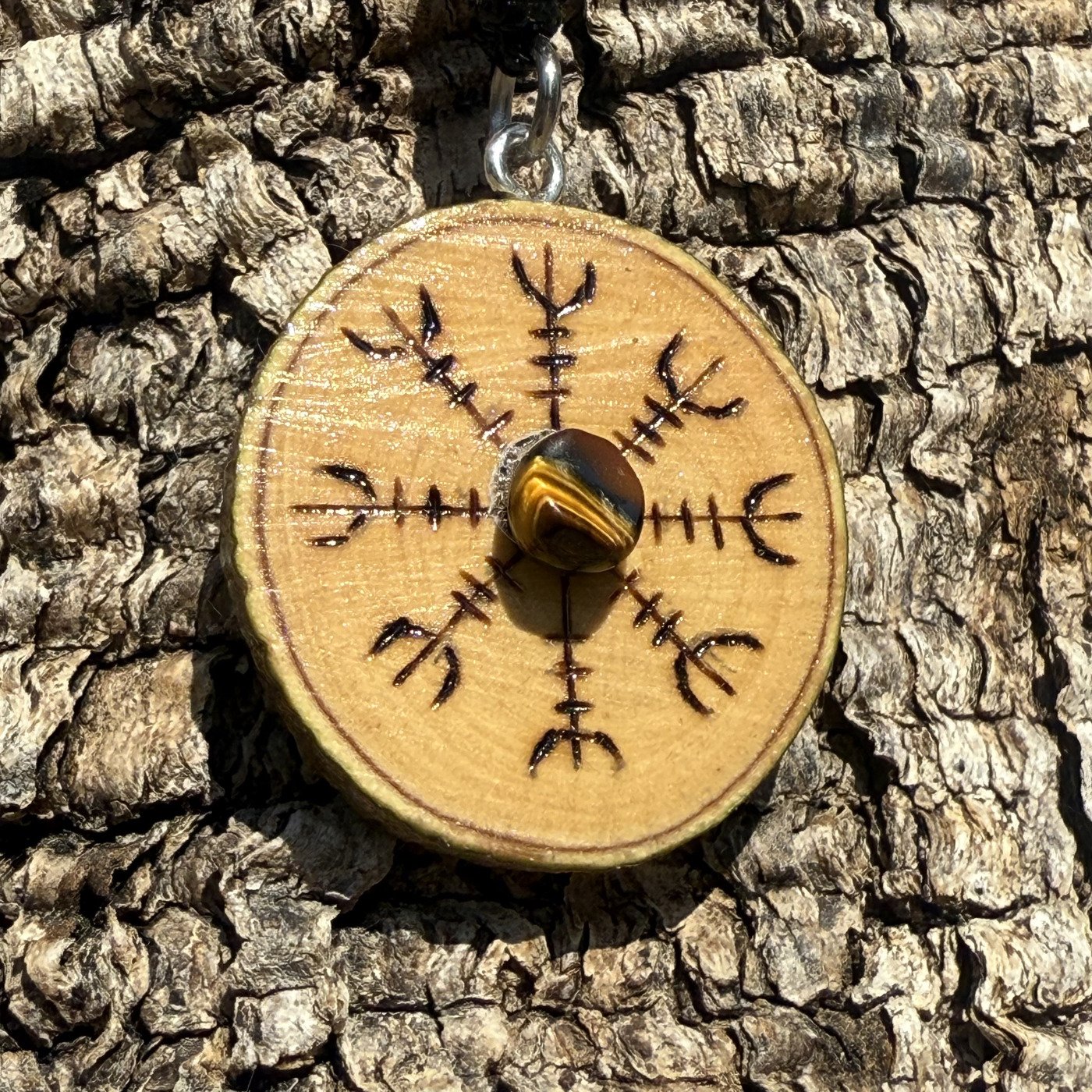
The Ægishjálmur is one of the most potent magical symbols in the Nordic tradition. Its name translates as «Helm of Awe» or «Helm of Aegir», and its purpose was twofold: to instil fear in enemies and to protect the bearer from all harm.
Its form is distinctive: eight trident-shaped arms radiating from a common centre, each ending in a figure that evokes both strength and threat. Unlike the Vegvisir — which guides — the Ægishjálmur dominates. It is the symbol of the warrior who not only resists, but paralyses the adversary before combat even begins.
The first written reference to the Ægishjálmur appears in the Völsunga Saga, one of the most important texts of Norse mythology, where the dragon Fáfnir wears it on his forehead to spread terror among his enemies. It later appears in the Galdrabók, a 17th-century Icelandic grimoire.
In Viking culture, protection was not only physical — it was spiritual. Norse warriors believed that the right symbols could change the course of a battle, paralyse the enemy or make the bearer invulnerable.
The Ægishjálmur was painted on warriors' foreheads before combat, engraved on armour and shields, and worn as a personal amulet. It was not passive magic — it was a declaration of intent. Whoever wore the Helm of Awe was telling the world: I am indestructible, and you know it.
But beyond war, the Ægishjálmur was also used as everyday protection — against invisible forces, against bad fortune, against everything that cannot be seen but can cause harm. In that sense, its meaning transcends the battlefield and remains fully relevant today.
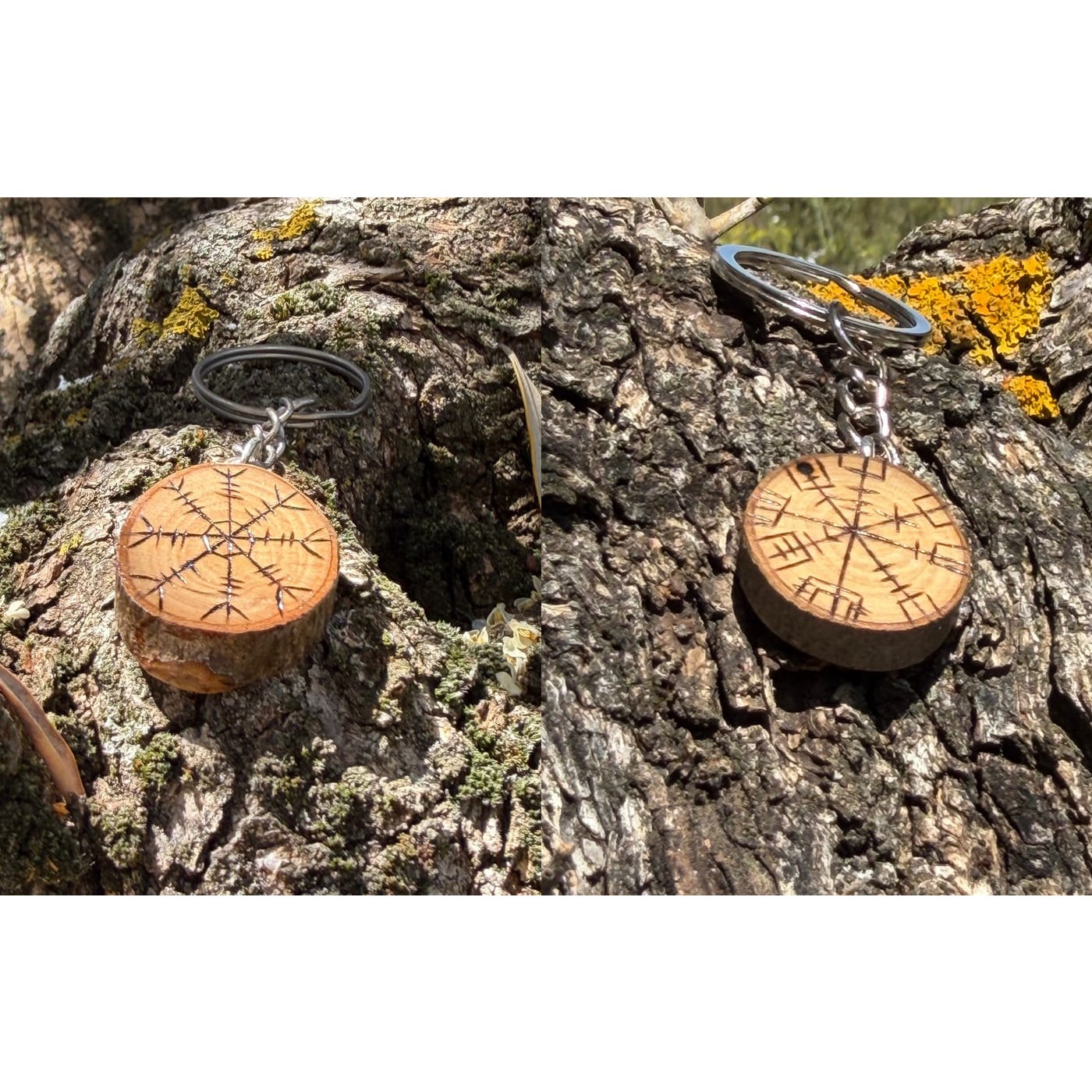
It is the most frequent question. Both are Nordic symbols with eight arms radiating from a centre — but their purpose is completely different.
The Vegvisir guides. It is the spiritual compass that ensures the bearer will find their way even when the environment is hostile. It is a symbol of orientation and gentle protection.
The Ægishjálmur dominates. It is the shield that paralyses the adversary and makes the bearer invulnerable. It is a symbol of active force and powerful protection.
If the Vegvisir is the traveller's companion, the Ægishjálmur is the warrior's shield. Many people wear both — each for a different purpose.
At Arte Rúnico, every Ægishjálmur is born in the fields of Paracuellos de la Ribera, a village in the Calatayud region that fights, like so many in emptied Spain, against depopulation. The wood I use comes from the suckers I collect in the village's olive groves — shoots I cut to give the tree more strength and turn into something that lasts decades.
The process begins with collecting the suckers, which I can do throughout the year. Then comes the drying — months of waiting in a ventilated place. The cut is made with a Japanese saw, which allows unmatched precision. Sanding follows in several phases, until the surface is perfectly smooth.
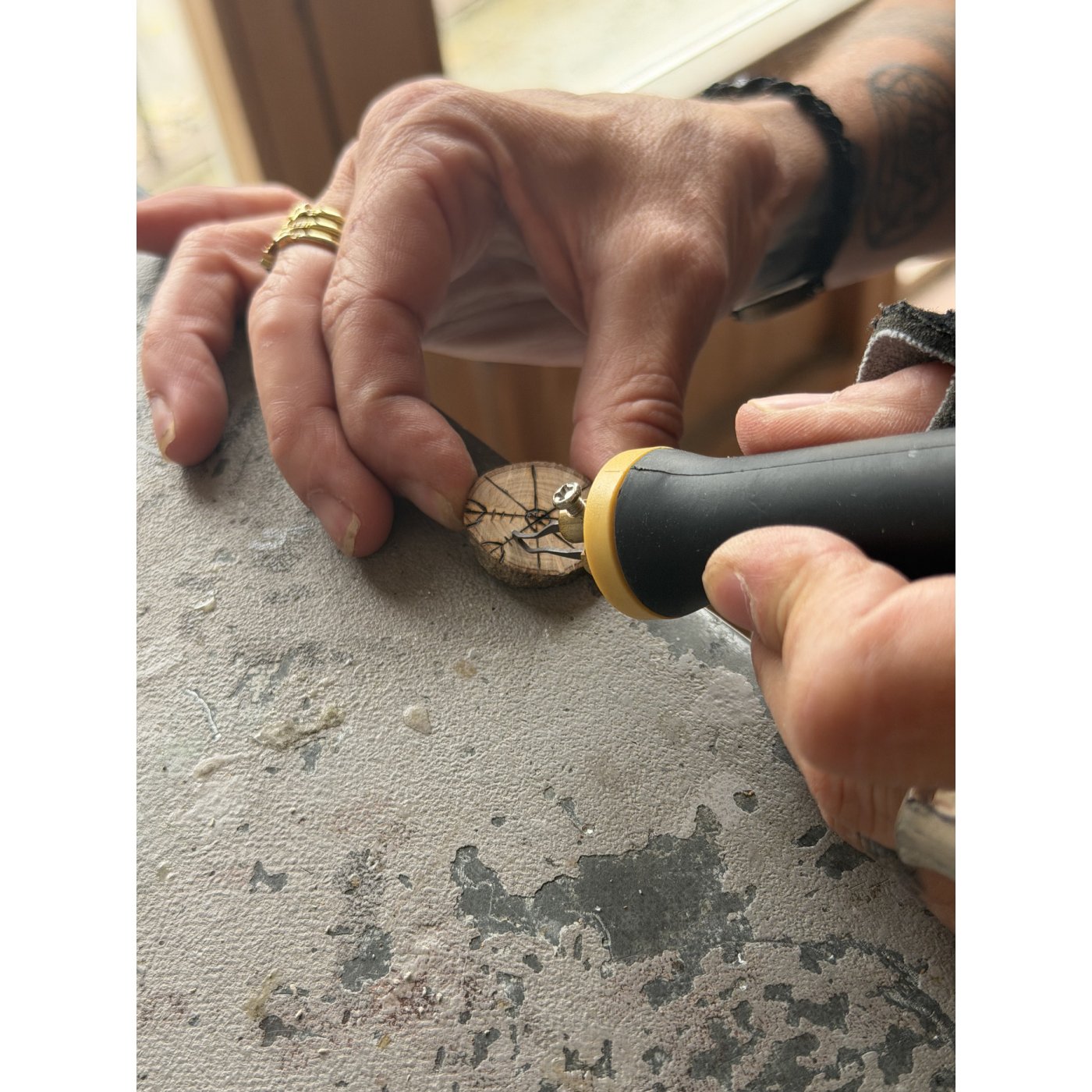
And then comes the pyrography. The Ægishjálmur is a complex symbol — eight arms, each with its own ending, requiring concentration and a steady hand. Every line is drawn by hand with a hot tip, without stencils or laser. No two pieces are alike. That is the signature of handmade work.
The front face receives varnish to protect and seal the engraving. The back is treated with natural oil that nourishes the wood. The village is in every piece, literally.
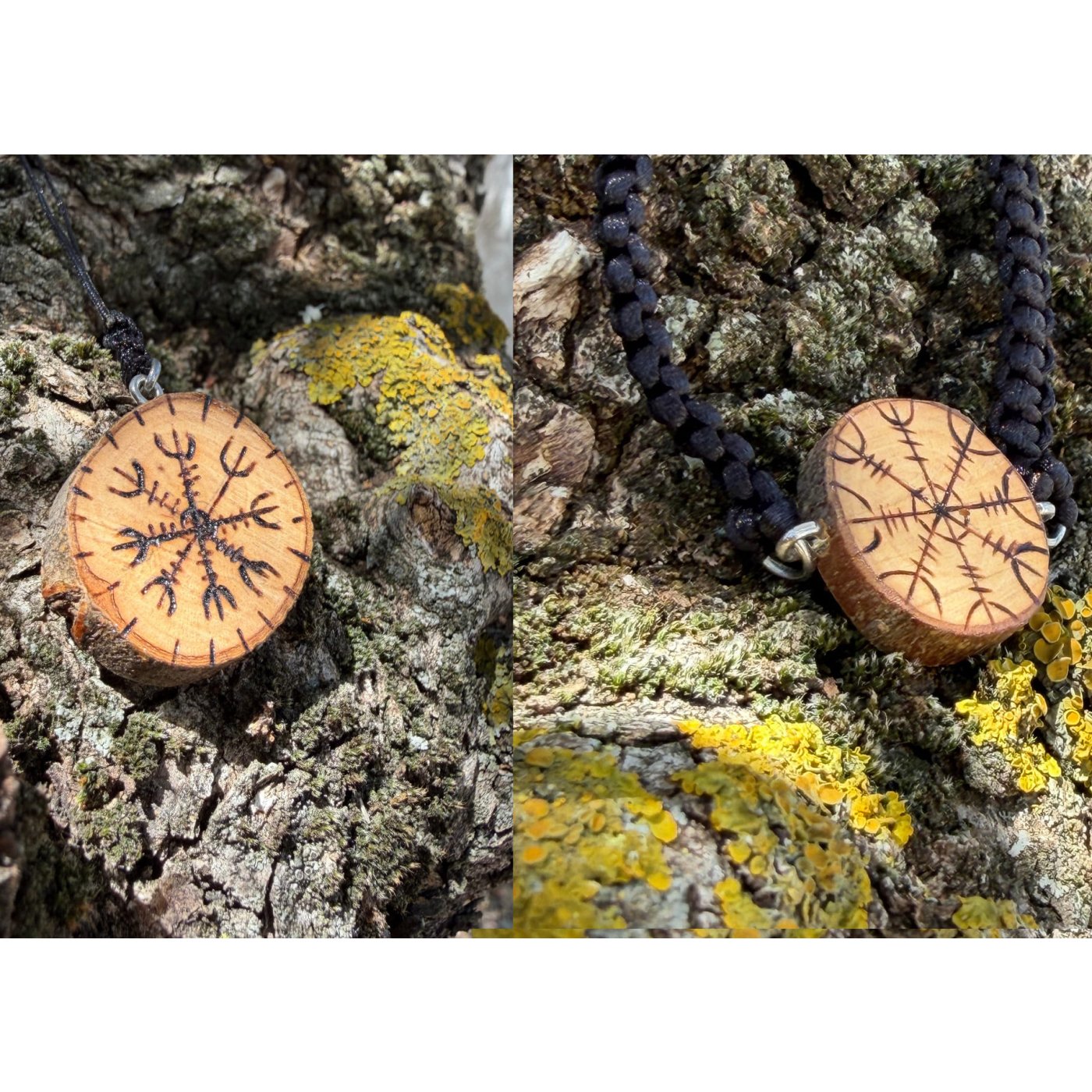
All pieces are hand-carved in Aragonese olive wood from Paracuellos de la Ribera.
Large Ægishjálmur Pendant — At 2.5 cm in diameter and 0.8 cm thick, this is the most imposing version in the collection. You feel it in your hand — it has weight, it has body. The symbol is pyrographed with the depth and relief that only this thickness allows. A pendant that does not go unnoticed and does not intend to.
Ægishjálmur Bracelet with black macramé — Viking warriors carried their shields on their arm. This bracelet revives that tradition by placing the Ægishjálmur exactly there: on the wrist, at the place of gesture, action and strength. Adjustable between 5.5 and 8 cm.
These and other pieces are part of the protection talismans collection at Arte Rúnico.
In a world without dragons or battlefields, the Ægishjálmur remains relevant — because the threat is not always physical. Wearing it is a declaration that you have a shield. That you are protected. That whatever comes, you face it.
It is also a connection with a centuries-old spiritual tradition, engraved in the wood of an olive tree that has been growing in silence for decades in the fields of Paracuellos de la Ribera, in the Calatayud region, in Aragon.
See all Arte Rúnico protection talismans →
Keep reading: Arte Rúnico Gemma Anjana — a heartfelt project from Paracuellos de la Ribera →
