




Login
Login
The Vegvisir is the Viking compass that guided Nordic sailors. Discover its origin, its meaning and how Gemma Anjana hand-carves it on Aragonese olive wood.
Before a piece reaches your hands, there is a journey. It begins in the fields, among the olive trees of Paracuellos de la Ribera, with a freshly collected sucker. It ends months later somewhere in the world — in a backpack in Munich, on a keychain in Montreal, or around someone's neck in Turkey who carries a piece of Aragon without knowing it.
I am Gemma Anjana. I hand-carve runic symbols in my workshop in the Calatayud region. This article tells the story of the Vegvisir — what it is, what it meant to the Vikings, and how it becomes a unique piece from wood to your hands.
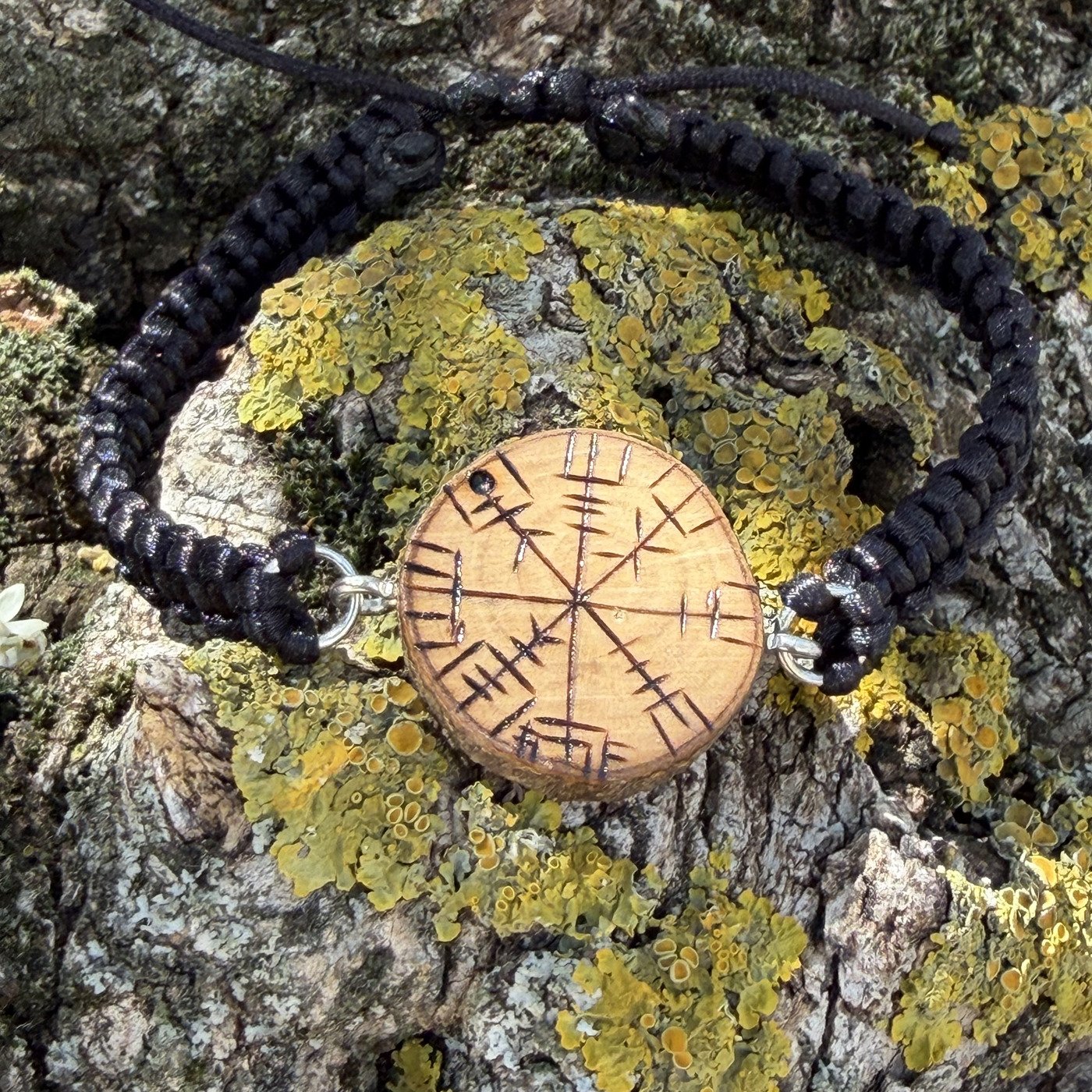
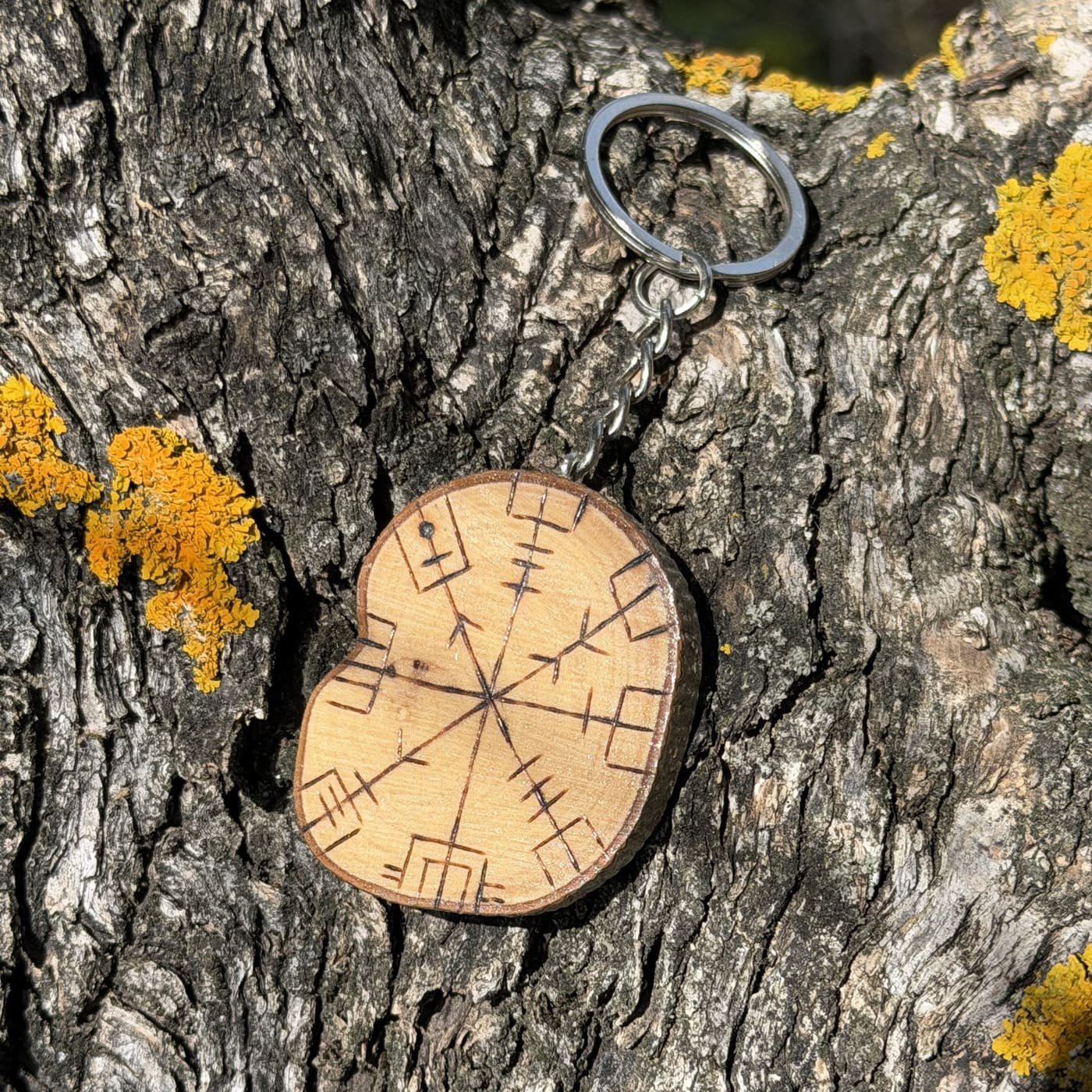
The Vegvisir is a magical symbol of Icelandic origin. Its name in Old Norse literally means «that which shows the way» — a spiritual compass, not a physical one.
The only surviving written record of the Vegvisir appears in the Huld Manuscript, compiled by Geir Vigfusson in Akureyri, Iceland, in 1860, based on three earlier manuscripts on magic from the Nordic tradition. The text reads: «If this sign is carried, one will never lose one's way in storms or bad weather, though the way be not known.»
Its form is unmistakable: eight runic arms radiating from a common centre, each with its own design. It is not a decorative symbol — it was a real talisman of the Icelandic magical tradition, with a very specific purpose: to protect the traveller and ensure they found their way, no matter what.
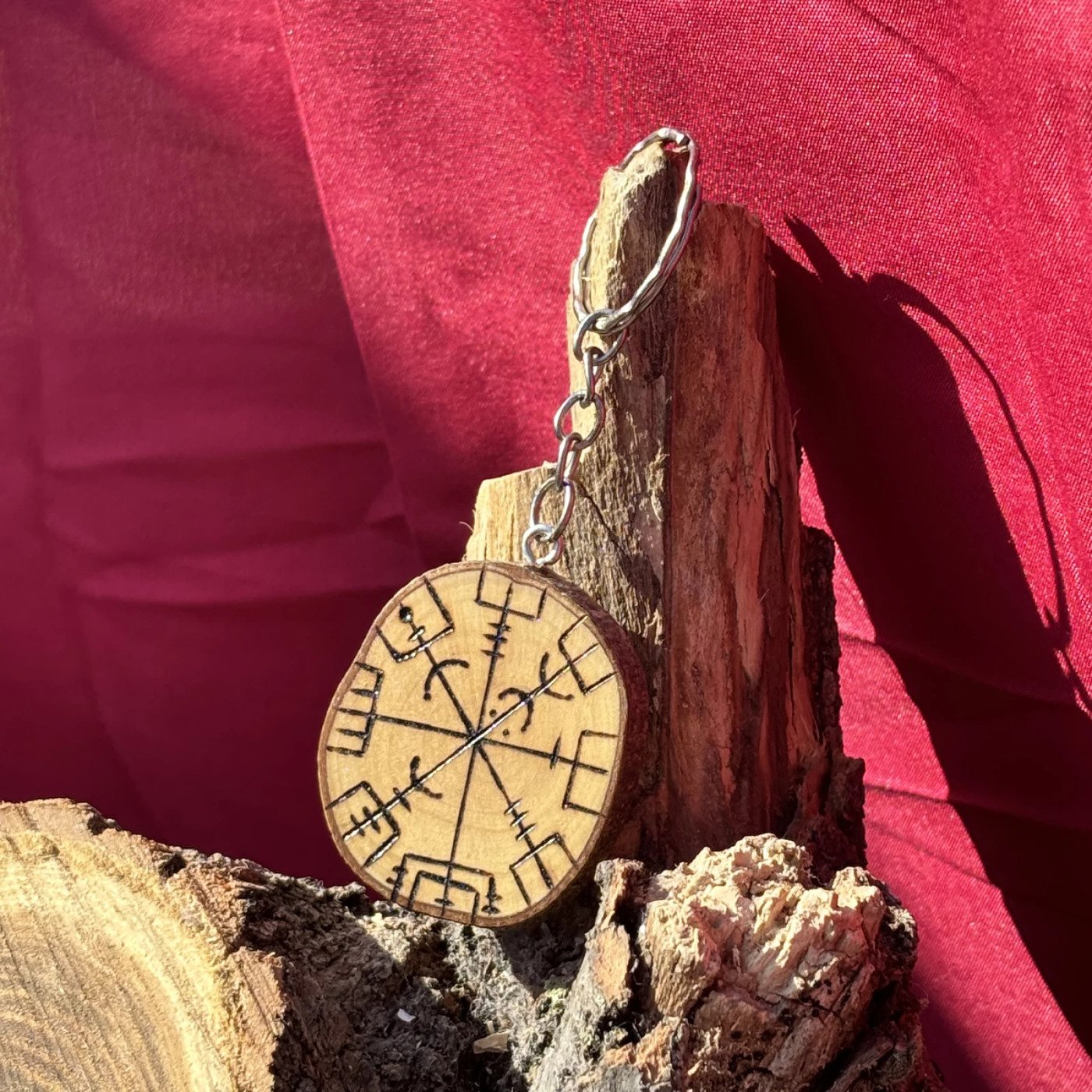
The Vegvisir is popularly associated with the Vikings — and that is no coincidence, though the connection requires an important nuance.
The Nordic peoples of the Viking Age (8th to 11th centuries) were the most daring sailors of their time. They crossed the North Atlantic in wooden ships, reached North America centuries before Columbus, and colonised Iceland and Greenland. The sea was their world — and the North Sea is one of the most dangerous on the planet. In that context, getting lost meant dying.
The Vikings used runic magical symbols as spiritual tools of protection before setting sail. The seiðr — mages and shamans of the Nordic tradition — were responsible for activating those symbols through rituals. However, the Vegvisir as we know it is not documented in the Viking Age — its first written reference dates from 1860, almost a thousand years later. What is certain is that it draws from that same Nordic magical tradition, the same language of symbols that Scandinavian peoples had cultivated for centuries.
That is why the Vegvisir and the Vikings go hand in hand in the collective imagination: not because Nordic sailors necessarily carried it engraved on their skin, but because it is the child of the same spiritual tradition that saw them sail towards the unknown.
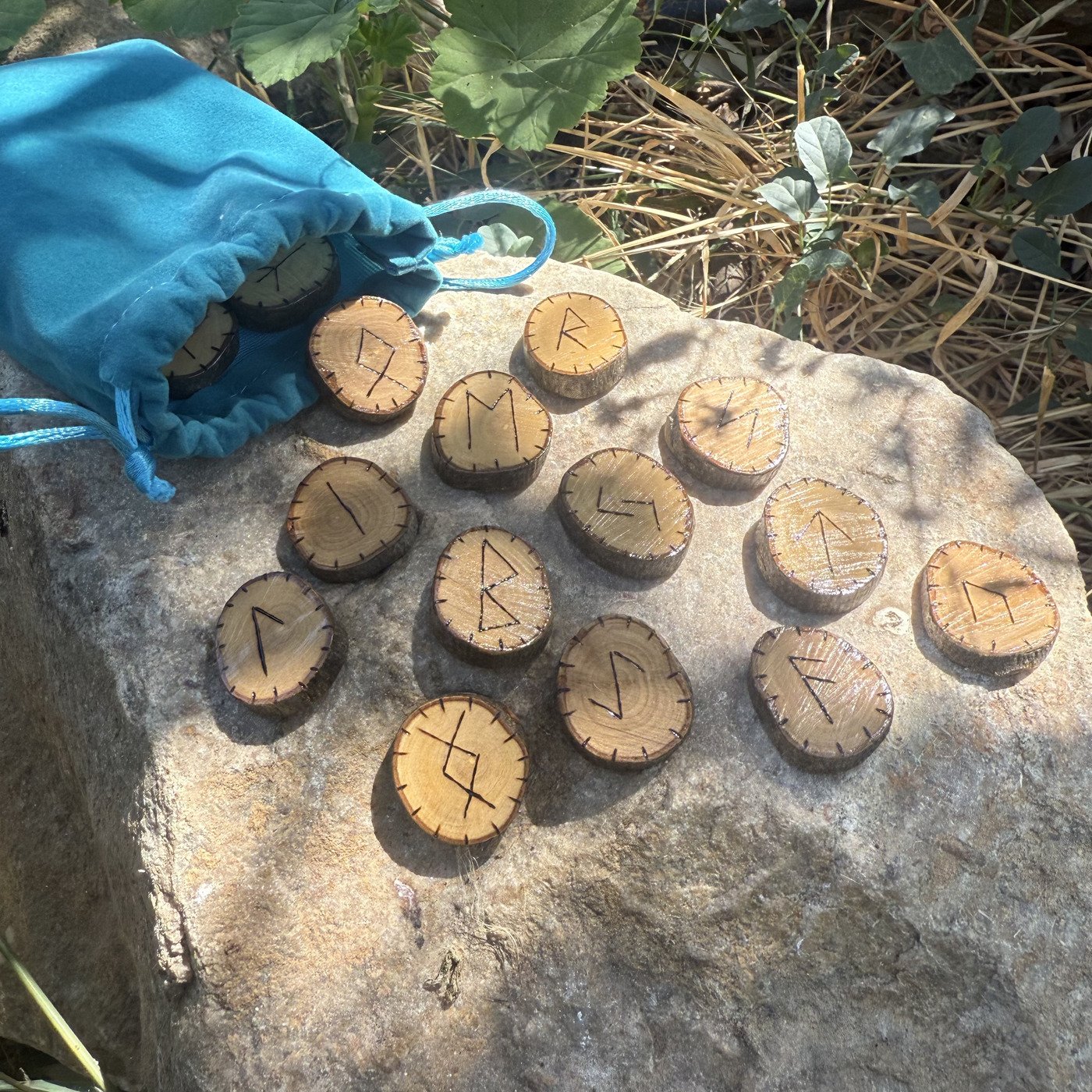
It is a frequent question. The answer is no — although they are related.
Runes are the alphabet of the Germanic and Nordic peoples, with a system of 24 symbols called the Elder Futhark. Each rune has a name, a sound and its own symbolic meaning. They were used for writing, but also as tools for divination and protection.
The Vegvisir is not a rune — it is a magical stave (in Norse galdrastafur), a composite figure that combines several runic elements into a unique symbol with a specific purpose: to guide. It shares the visual language of runes but has a different function and origin.
Interest in Viking culture and Norse mythology has grown steadily. The Vegvisir is worn today by those seeking guidance in times of change, those who identify with Viking strength, and those who simply need a reminder that there is always a path, even when they cannot see it yet.
I could carve it on any wood. But I choose Aragonese olive wood for a reason that goes beyond aesthetics.
In the fields of Paracuellos de la Ribera, Calatayud region, there are olive groves that have gone without proper care for years. The population is ageing and many owners can no longer prune their trees. I collect the suckers — vertical shoots that consume the tree's energy — throughout the year. In doing so, I help strengthen the village's olive trees.
Olive wood has a density and resistance that make it ideal for pyrography. But there is something more: the olive tree is in many traditions the tree of life, a symbol of peace, longevity and connection with the eternal. There is something deeply coherent in engraving Nordic protection and guidance symbols on the wood of a tree that has been a sacred Mediterranean symbol for millennia. Two traditions, one single piece.
1. Collection — I collect olive suckers throughout the year, whenever the trees need it. Branches from other trees — almond, cherry, acacia, medlar — are collected during the winter pruning season.
2. Drying — The wood needs months of drying in a ventilated place. Wood with residual moisture cracks when heated by the pyrography tool. Patience is not optional.
3. Cutting and sanding — I cut the wood into discs or blocks with a Japanese saw, which allows a clean, precise cut without damaging the wood grain. Several phases of sanding follow until the surface is perfectly smooth.
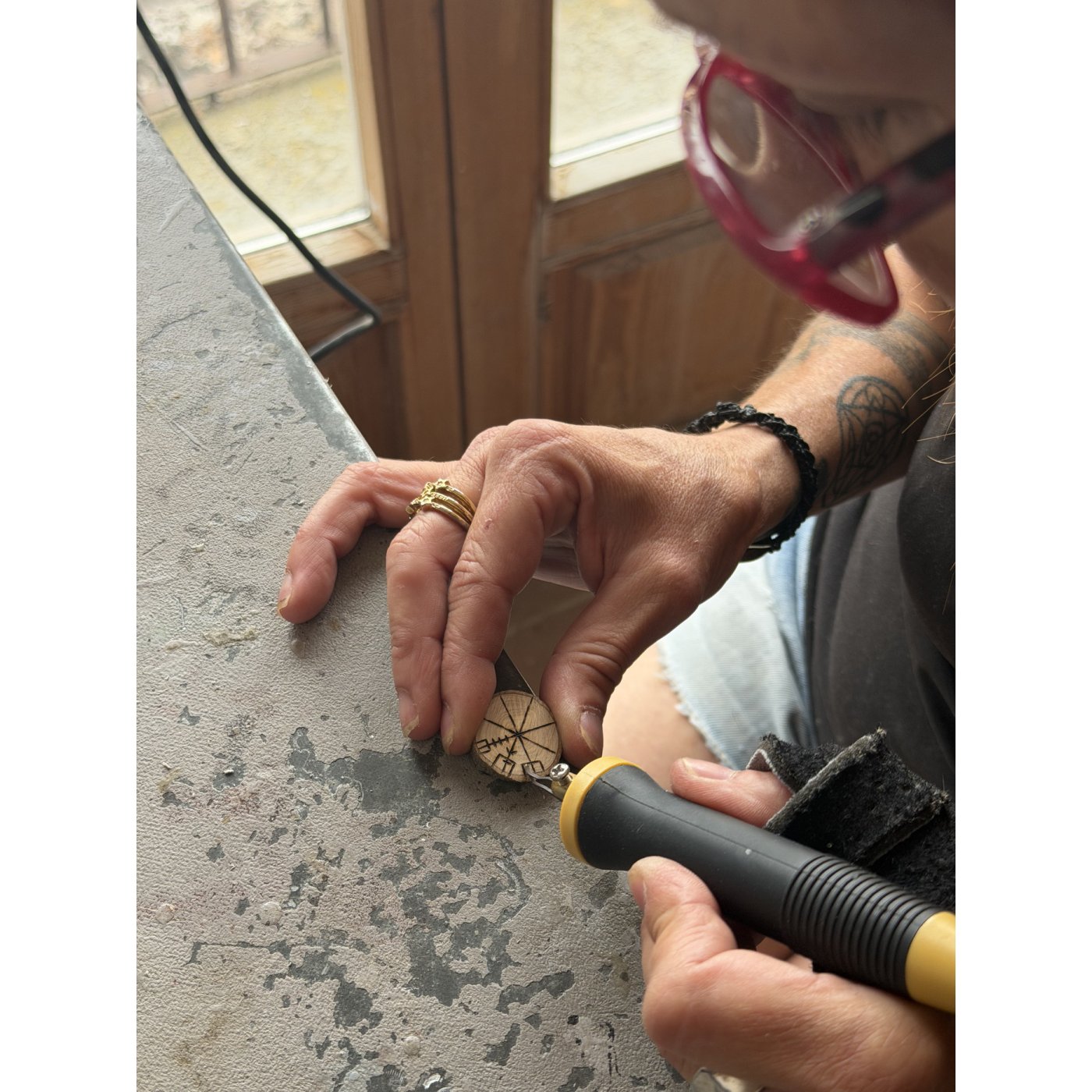
4. Pyrography — Every line of the Vegvisir is drawn by hand with a hot tip, without stencils or laser. The symbol has eight arms, each with its own design. No two pieces are alike. That is not a defect. It is the signature of handmade work.
5. Finishing — The front face, where the symbol lives, receives a coat of varnish that protects and seals the engraving. The back is treated with natural oil that nourishes the wood and gives it that smooth texture you feel when you hold it.
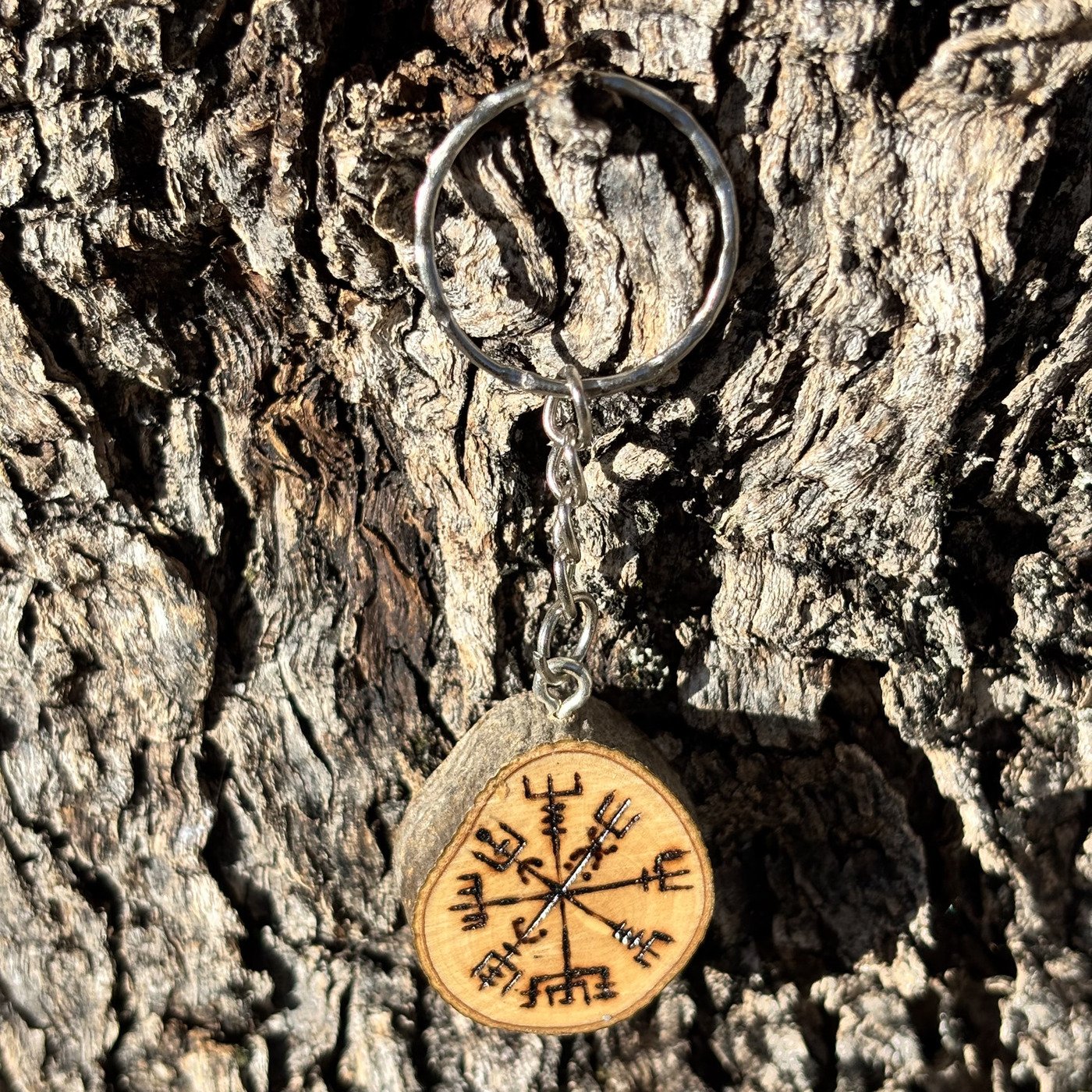
There are pieces that are manufactured and pieces that are created. The difference is not only in quality or durability, but in what they contain.
When you buy a Vegvisir from Arte Rúnico you carry with you wood from an olive sucker from Paracuellos de la Ribera — a shoot we cut to give more strength to the tree, dried with patience, cut with a Japanese saw and engraved by hand stroke by stroke.
That cannot be mass-produced.
See the full collection of handcrafted Vegvisirs →
Keep reading: Arte Rúnico Gemma Anjana — a heartfelt project from Paracuellos de la Ribera →
